Do you wonder what to look for in a bed and breakfast blogger? You may (or may not) have a blog for your bed and breakfast inn. If you do have a blog, chances are you are so busy as an innkeeper that you really do not want to take the time to write about your inn. The key is to focus on what you do best (providing excellent hospitality) and let a professional bed and breakfast blogger do the rest!
Why do I specify “professional bed and breakfast blogger”? First of all, you want someone who is a professional blogger. Someone who understands key strategies to effectively blog online so that search engines notice your content. Secondly, you want someone who is familiar with the bed and breakfast industry. Plenty of people can blog, but they need to convey the awesome benefits of staying at a bed and breakfast.
Another key factor is how well they can promote your local area. You want to give potential guests a reason to want to visit your area. A few important ways to promote your local area that include:
Feature local places of interest: arenas, colleges, gardens, museums, restaurants, stadiums, theaters, tourist attractions
Promote local events: concerts, festivals, marathons, parades,
Recommend fun activities: biking, fishing, hiking, canoeing, touring
A professional bed and breakfast blogger should have these personality traits:
Adaptable: readily adjusts to different situations
Brilliant: shows great intelligence and talent
Creative: has original thoughts and imagination
Dedicated: committed to doing a fantastic job
Efficient: competent and capable; makes good use of time
Focused: pays attention to what is important
Genuine: authentic, real, and sincere
Honest: truthful, credible, upright, and fair
Innovative: tends to do things that are new or improved
Just: guided by principle; does what is right
Kind: benevolent, considerate, and gentle
Loyal: faithful to commitments
Motivational: inspiring; has a positive influence on others
Neat: organized and orderly
Optimistic: expects positive outcomes; has a favorable view of events
Perceptive: shows keenness of insight and intuition
Quotable: words things clearly and succinctly
Reliable: dependable in achievement and accuracy
Steadfast: firm in purpose; unwavering resolution
Trustworthy: deserving of trust and confidence
Understanding: superior power of discernment; compassionate
Valuable: worthy of respect and admiration; contributes profitable work
Web savvy: has practical experience using the internet and online resources
X-traordinary: exceptional, noteworthy, and remarkable
Young at heart: has a youthful outlook regardless of one’s age; energetic
Zealous: enthusiastic, devoted, and diligent
If you are looking for a bed and breakfast blogger who can help you add a blog or provide fresh blog content on a consistent basis, please contact Kristi Dement of Bed and Breakfast Blogging for a free consultation.
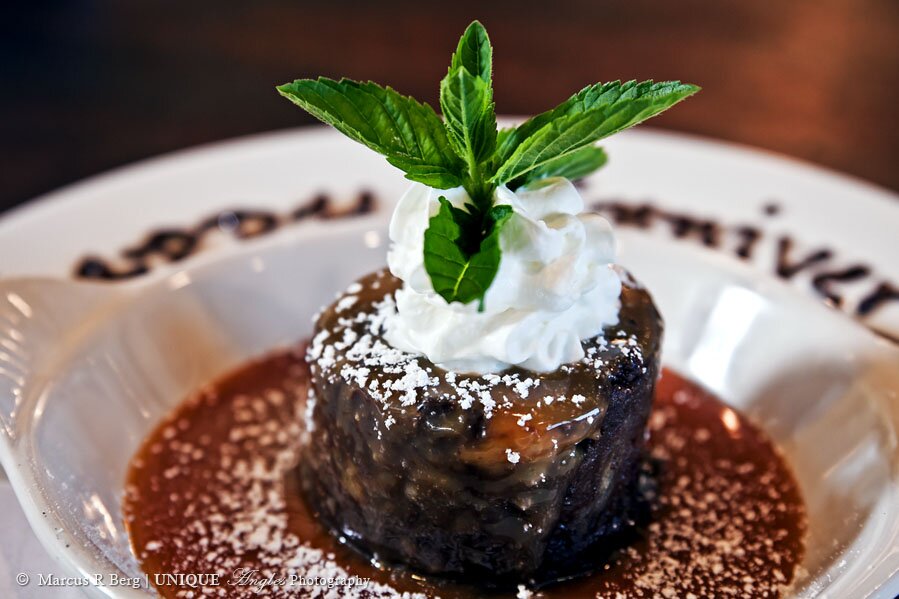
Top image by Marcus Berg of Unique Angles Photography
You can use Twitter for hospitality business growth. Twitter for Dummies (3rd edition by Laura Fitton, Anum Hussain, and Brittany Leaning) is a book filled with practical information whether you are using Twitter for social or for business purposes or both!
Twitter’s limit of 140 characters forces you to focus your thoughts into concise, direct sound bites. You have 160 characters for your bio statement which could also be your mission statement.
“@yourtwitterhandle is where ___________ (types of people) can find ____________ (the value of following your account)
Be sure to link back to your main website so they can learn even more about you and visit/stay at your location.
The key is to give your audience a reason to follow your tweets. What makes you and your place of hospitality so unique?
Links to articles: about your business or local area
Quotes: to make others think or share great reviews
Data: such as useful facts
Entertaining content: such as clean humor
Smart tips: relevant to what you do
Recognition and curation of other great accounts
Probing questions: to learn more about your audience
Smart answers to others’ questions: be helpful and genuine
Retweets: share the tweets that your happy customers mention you in
Whether you are a bed and breakfast inn, hotel, or restaurant, your place of hospitality can use Twitter to attract more guests. With all of these ways to use Twitter and the types of valuable content to share, you can to use Twitter for hospitality business growth.
Here are some behind the scenes secrets to Disney hospitality magic. Disney Company focuses on giving their customers a memorable guest experience that exceeds their expectations by paying attention to details. Hospitality providers know that exceeded expectations leads to returning guests as well as word-of-mouth guest referrals.
Hospitality providers should always analyze the experience from the guest’s perspective. Disney defines “guestology” as the art and science of knowing and understanding their customers. More commonly known as “market research.”
Disney’s theme is “We create happiness [their mission] by providing the finest in entertainment [how their mission is accomplished] for people of all ages everywhere [for whom].” Disney set four criteria standards (in order of priority) which outline the the actions necessary to accomplish their service theme:
Safety (they look out for the welfare and peace of mind of their guests)
Courtesy (they require that every guest be treated like a very important person)
Show (they must offer seamless and exceptional entertainment for guests)
Efficiency (they strive for smooth operation and prioritize their standards)
With the magic of service, Disney recognizes that the most important judges are your customers. Therefore, it is extremely important to know and understand your customers. Demographics are factual knowledge about your guests including who they are, where they are from, and how much they spend. Psychographics seek to better understand guests’ mental states–their needs, wants, expectations, and emotions.
Disney, as a company, watches what people do in their theme parks, resorts, and stores to find out how they can make it more enjoyable for them. They use methods like surveys, comment cards, guest observations, and mystery shoppers as well as read guest letters and emails.
Disney studies guest usage and visitation patterns. Knowledge developed from guests is used to create and improve all elements of the quality service cycle. According to Disney, it is crucial to gather information at a variety of points during a guest’s experience.
With the magic of the cast [what they call their staff], Disney understands that you never get a second chance to make a first impression. Disney trains their cast in universal procedures and behaviors, with performance tips, and guidelines for guest service.
Make eye contact and smile: start and end every guest contact and communication with direct eye contact and a sincere smile
Greet and welcome each and every guest: extend the appropriate greeting to each and every guest with whom you come into contact, make guests feel welcome by providing a special differentiated greeting in each area
Seek out guest contact: it is the responsibility of every cast member to seek out guests who need help or assistance (such as listening to your guests’ needs, answering questions, and offering assistance)
Provide immediate service recovery: it is the responsibility of all cast members to attempt, to the best of their abilities, to immediately resolve a guest service failure before it becomes a guest service problem; always find the answer for the guest and/or find another cast member who can help the guest
Display appropriate body language at all times: it is the responsibility of every cast member to display approachable body language when “on stage” (visible to guests): be attentive, clean cut, have good posture, and appropriate facial expression
Preserve the “magical” guest experience: always focus on the positive rather than the rules and regulations; talking about personal or job-related problems in front of guests is unacceptable
Thank each and every guest: extend to every guest a sincere thank you at the conclusion of every transaction and give an expression of appreciation as he or she leaves your area
With the magic of setting, Disney wanted his cast to pull off fantasy without losing sight of reality. It was important to him that others find their fantasy believable.
Whether companies know it or not, all organizations build messages to their customers into the settings in which they operate. The setting communicates the quality of the person’s products and services that customers can expect as well as the price they are willing to pay.
Setting must be designed and managed effectively to effectively communicate and deliver service to customers. Setting is not restricted to physical properties, but extends to reservation systems, cleanliness, comfort, and so on. Setting components include:
Walt Disney’s motto was, “If you can dream it, you can do it.” “Imagineering” was his term for the blending of creative imagination and technical know-how. Disney has the following ten setting principles:
Know your audience: have a firm understanding of who will be using your setting
Wear your guest’s shoes: evaluate your setting from the customer’s perspective by experiencing it as a customer
Organize the flow of people and ideas: think of the setting as a story and tell that story in a sequenced, organized way; build the same order and logic in the design of customer movement
Create a visual magnet: Disney uses visual landmarks (like Cinderella’s Castle) to orient and attract customers
Communicate with visual literacy: use the languages of color, shape, and form to communicate through setting
Avoid overloads: do not bombard customers with data; let them choose the information when they want it
Tell one story at a time: create one setting for each big idea; avoid the confusion of mixing multiple stories into a single setting
Avoid contradictions: every detail and every setting should support and further your organizational identity and vision
For every ounce of treatment, provide a ton of treat: give your customers the highest value by building an interactive setting that gives them the opportunity to exercise all of their senses
Keeping it up: never get complacent and always maintain your setting; keep it clean, protect it from damage, and repair wear and tear
What does your setting tell your customers? What they see is as important as what they don’t see. Setting not only creates an impression, but it can guide guests through service experiences. Appeal to all five senses: sight (ex: colors), sounds (ex: music), smell (ex: popcorn), touch (ex: water fountains), and taste (ex: changing menus).
The Disney cast must keep onstage [anywhere they are visible to guests] and backstage [not seen by guests] separate. Did you know that Disney employees can go underneath the park to get from one area of the part to another? That is why you will never see a Disney character travel through a section of the theme park unrelated to their character.
Like the Biltmore Estate in Asheville, North Carolina, Disney offers behind-the-scenes tours. Thus, the setting should support and enhance the guest experience and deliver quality service.
Important to Walt Disney was that he provide superior service and hospitality. That meant hiring and training his “cast” to treat the guests with utmost respect. Walt also paid attention to the details of setting.
Walt Disney and his brother Roy’s legacy lives on to this day. Today, Walt Disney World Magic Kingdom in Orlando, Florida has an average of 53,000 visitors each day and is the #1 most-visited theme park in the world.
The Disney empire also includes include Disneyland; EPCOT; Animal Kingdom; Disney television, radio, and movies; and Disney merchandise sold in Disney stores and at Disney theme park locations. Thus, Disney hospitality magic is alive and well.
How to easily attract more guests to your inn? One key component is to focus on good things to do, things to see, food to taste, places to explore, and places to go in your local area.
Why do most people visit our local area? (ex: for a romantic getaway in a secluded area or in a bustling city with lots of culture)
What do people like to do when they visit my area? (ex: attend a major business conference or participate in a marathon for your favorite cause)
How could I convince someone to want to visit my area? (ex: write great content about your local area and develop a reputation for showing warm hospitality to your guests)
Do I ask for guests to give me great online reviews? Tell guests when they arrive, that if for some reason they do not have a five star experience with you, to let them know in person how it could have been better. For the few who were disappointed, perhaps offer them an upgraded room or some other perk if they decide to return again. Make it your marketing mission to get 5 star reviews online so others will want to visit.
Then, as you read this list, think about what you could feature in your local area:
Another important key to attract more guests is to establish relationships with these other local proprietors. Perhaps the business person will give you a reasonable deal in exchange for exclusively their particular type of business (such as using only one local florist for all of your flower arrangements). Consider putting together guest packages that include local area businesses:
When you categorize your blog posts, this allows your web visitors to easily go to the content that best fits their needs. For example, some of my blog categories include:
Write about what makes your area a destination for most people. For some, this could mean featuring local concerts at your popular entertainment venues or dishes from award-winning restaurants. If your bed and breakfast is in a place known for popular events (such as film festivals), be sure to promote that.
Write about things that make your inn unique. Give them reasons to choose your inn for their accommodations. Does your bed and breakfast have its own restaurant, horse farm, gift shop, spa, or something else? Maybe you have amenities such as hot tubs and fireplaces in private guest rooms. For those who cater to the business traveler, be sure to talk about your free wi-fi internet access as well as desks with comfortable office chairs.
In summary, write blog posts and put on social media the things that are popular in your local area as well as what makes your inn so special. Offer packages that include things only found in your area. Be sure to encourage five star reviews from your guests. This is how you will easily attract more guests to your bed and breakfast inn!
Images by Marcus Berg of Unique Angles Photography
Ann Handley, author of Everybody Writes: Your Go-To Guide To Creating Ridiculously Good Content, offers tips for writing email and much more. This can be applied to bed and breakfast marketing as well.
Writing For Email:
Use short subject lines (Vacation in “Your Location”)
Let your free flag fly (“your third night is free”)
Use the recipient’s first name (to personalize it)
Keep the email copy short (remember WHY you are writing it)
Be a real person and communicate with a real voice (write like a friend)
Show enormous empathy (“we understand your need to get away”)
Use real images (show inviting pictures of your B&B)
Have a specific call to action (ex: click here to subscribe to our blog posts)
Make sure you are aware of CAN-SPAM Act of 2003 (spam = legal trouble)
Use numbers (helps people know what to expect before they read it)
Use lively words: ultimate, brilliant, awesome, intense, hilarious, smart, critical, surprising, etc.
Ann Handley, author of Everybody Writes: Your Go-To Guide To Creating Ridiculously Good Content, gives practical tips for writing your “Home” page and your “About Us” page.
Ann Handley recommends that your home page leave the reader feeling like, “We get you. And what’s more, you belong here. We understand your challenges, your fears, your pain, your hopes, your needs…”
Writing The About Us Page:
The best “About Us” pages are not really about the company
Those pages focus on relaying who they are in relation to the reader
Talk about what you do for customers (your B&B guests)
What they do in their spare time (may be leisure activities near your inn)
With any kind of writing these valuable suggestions from Ann Handley can be implemented. Then bed and breakfasts will likely attract more business. If you are too busy as an innkeeper (or have no desire to do marketing), contact Kristi Dement of Bed and Breakfast Blogging for a free consultation.
I kicked off 2015 with my first blog post discussing how to have extraordinary productivity. This post will highlight the book, “13 Things Mentally Strong People Don’t Do: Take Back Your Power, Embrace Change, Face Your Fears and Train Your Brain for Happiness and Success” by Amy Morin.
The author defines mental strength as being able to regulate your emotions, manage your thoughts, and behave in a positive manner. Anyone has the power to improve their mental strength. The benefits of mental strength include:
Increased resilience to stress: better equipped to handle problems more efficiently and effectively
Improved life satisfaction: behaving according to your values = peace of mind, recognizing what’s really important in life
Enhanced performance: helps you reach your full potential
So what are the 13 things mentally strong people don’t do? Then we look at what they do instead.
1) Mentally strong people don’t waste time feeling sorry for themselves:
Focus on what they can still accomplish with their life
Choose to take control and change their attitude
Make a conscious decision to celebrate life’s gifts
Feel grateful for what they have
Volunteer, stay active, and continue to learn new things
Look for the silver lining in circumstances
Actively problem solve to improve situations
Participate in experiences/activities that help them feel better
Stay focused on what they do have rather than what they don’t have
2) Mentally strong people don’t give away their power:
I love the new book, “The Five Choices: The Path to Extraordinary Productivity” by Kory Kogon, Adam Morrill, and Leena Rinne. The authors explain what they mean about there being a “productivity paradox”. It is both easier and harder than ever before to achieve extraordinary productivity and feel accomplished in our lives. We all experience three challenges:
The overwhelming flow of decisions we have to make in daily life
The authors propose that we make five choices in order to experience extraordinary productivity. Choice 1 is to act on the important, but not to react to the urgent (what feels like it has to be done now, but may not lead to any results). Borrowing from Stephen Covey, they use his 4 quadrants of how people spend their time.
Quadrant 1: Necessity: crises, emergency meetings, last minute deadlines, pressing problems, and unforeseen events
Quadrant 2: Extraordinary productivity (what we want to focus on): proactive work, high-impact goals, creative thinking, planning, prevention, relationshipbuilding, learning and renewal
Quadrant 3: Distraction: needless interruptions, unnecessary reports, irrelevant meetings, other people’s minor issues, unimportant emails/tasks/phone calls, etc.
Quadrant 4: Waste: trivial work, avoidance activities, excessive relaxation, TV, gaming, internet surfing, gossip, and other time wasters
They explain that the results we achieve in life are impacted by our discernment. With practice we can rewire our brain to become more discerning and less reactive. They recommend settings these goals:
Choice 2 is to go for the extraordinary and not settle for ordinary. They quote brain expert, Dr. Daniel Amen, “To harness your brain’s power, it needs direction and vision. It needs a blueprint.” According to the authors, most people do not take the time to clarify what is most important to them and do not end up spending their time on those things. They recommend that those seeking to be more productive identify our few most important roles and define what success looks like in each role. These roles should be:
Represent our key relationships and responsibilities
Be relevant to our life right now (not the future)
We should then determine our vision of success in each role. Anchor our purpose and passion in a role title and craft a role statement for each role. Decide what contribution we want to make in each role. As (role title), I will (extraordinary outcomes) by (specific activities). The authors remind us that roles are dynamic therefore constantly changing. They discuss the importance of setting SMARTgoals.
Specific
Measurable
Achievable
Relevant
Time-bound
Extraordinary productivity means going to bed each night feeling satisfied and accomplished. By identifying the few most important roles we play, this gives us a framework for balance, motivation, and fulfillment. Anchoring our role titles and statements strengthens our ability to make good decisions about our time. Setting specific Q2 goals helps us direct our brains in the most productive ways.
Choice 3 is to schedule the big rocks, and don’t sort gravel. This is a figurative illustration. The big rocks represent the important Q2 priorities in our lives. We are to put those first. The gravel represents the distractions (Q3) and time wasters (Q4). If you start with the gravel, then there is no room for the rocks.
Everyone has the same amount of time, but some people can cram more in the spaces than others. The key is to focus our very best attention and energy on the few priorities that really matter. The authors recommend that we spend thirty minutes each week and ten minutes each day in Q2 planning so we can dramatically increase our ability to be and feel accomplished at the end of every day.
Review our roles and goals to see if they connect with our vision for our Q2 life
Schedule the big rocks (the 1 or 2 most important things you can do this week)
Scheduling a specific time and place to do something represents our higher-level commitment
The bottom line is that we should decide what is most important and get those activities already scheduled before our week begins. Schedule Q2 times during the week to proactively protect your Q2 priorities.
Choice 4 is to rule our technology and not let it rule us. Technology in and of itself is not the problem. It is how conscious and deliberate we are about how we use it that can be a problem. The book discusses sorting tasks into one of the Core Four.
Other information we want to keep track of that does not fit into any of the other 3 categories
The book asks readers if we know that over 196 billion emails are sent and received EVERY DAY?! At the moment of choice, we can act to make an appointment or schedule a task or file away contact information and notes. If this is not something we need, we can trash or delete the email. No need for our emails to pile up!
Choice 5 is to fuel our fire, but not burn out. The book discusses five energy drivers:
Move (exercising improves memory, brain health, and physical fitness)
Eat (choosing healthy foods and supplements over junk food and sugary food)
Sleep (we must get enough rest and not be sleep deprived which leads to poor decision making and even accidents)
Relax (to turn off our stress responses and restore our energy by taking regular breaks)
The Five Choices: The Path To Extraordinary Productivity book states that our brain is our number one asset in a knowledge-work world. Being conscious and intentional throughout the day takes a lot of energy. We need to have a clear and motivating purpose and a healthy physical body (be as healthy as we can be) in order to fulfill our purpose. Thus, we should invest regularly in the five energy drivers above to keep us from burning out. By implementing the five choices recommended in this book, we can be on the path to extraordinary productivity!
Act on the important and do not react to the urgent
Go for the extraordinary and not settle for the ordinary
We have been promoting the book The Power of Social Media: How to Use Visuals, Videos, and Social Media to Market Your Brand by Ekaterina Walter and Jessica Gioglio. This particular blog post will give a sneak peak into the authors comments about Tumblr.
For those not familiar with it, Tumblr is a social media channel that allows users to quickly reblog posts (texts, images, links, quotes, music, or videos) by others. Recently, Yahoo! purchased Tumblr for $1.1 billion. Tumblr is for quick visual inspiration and consumer lust. Users can only add comments if they reblog your post.
View analytics to see what sort of posts drive the most traffic, but still post a variety
Spend some time getting to know that platform and the kinds of content that people post
A Tumblr blog can be incorporated directly into a corporate website, which is great for search engine ranking. Businesses can use Tumblr as an overview of what is on their website.
We are highlighting some of the key points made in the very business savvy book, The Power of Visual Storytelling: How To Use Visuals, Videos, and Social Media to Market Your Brand, by Ekatarina Walter (@Ekatarina) and Jessica Gioglio (@savvybostonian). This blog post will focus on their information and tips about using the social media website, Pinterest.
Visual Storytelling Pinterest Facts:
Pinterest drives more referral traffic than Google Plus, YouTube, and LinkedIn combined
80% of Pinterest users are female, women also account for 85% of all consumer purchases
Choose strong themes, great images, snappy title to attract attention
Use images that are colorful, well balanced, and interesting
Add the “Pin It” button and other social sharing buttons to your website
Find ways to involve fans like competitions or sending in pictures of themselves
Decide on the story you want to tell with your images
Focus on what your customers would find useful, entertaining, and inspiring
YouTube Videos can be pinned to boards to show how-to and promotion videos
Show a behind-the-scenes look at staff, the local community, and industry
Put together looks and lifestyle ideas
Pin current popular images such as seasonal trends, events, holidays, and movie releases
By using Pinterest, companies (such as bed and breakfasts) can highlight the best of the best. Since people are visual by nature, putting together boards about various popular themes draws the attention of Pinterest viewers to the companies and their products and services. The Power of Visual Storytelling teaches powerful marketing tips to use social media websites including Pinterest.
While Pinterest is fun, it is important that businesses form a Pinterest strategy centered around the feedback they have received from other pinners.
Strategy:
Develop a strategy based on your analytics
Tailor your boards to the needs and interests of your followers (based on your Pinterest analytics)
Showcase your pins in an organized way that makes sense
Find out who is pinning what and why
Measure your impact and focus on boards performing the best
Create a variety of different boards that each target certain words
Cross-promote on other social media platforms (ex: Twitter, Facebook)
Include hash tags (#) in your board descriptions
Invite specific types of travelers into your bed and breakfast (ex: couples, business people, girlfriends, etc.)
Determine if you want to be pet-friendly, kid-friendly, or offer special events such as weddings or retreats
Look at how other B&B’s (with a large number of followers) use Pinterest
Pinterest can help virtually any business establish brand and get the word out. What you get out of Pinterest depends on what you put in it. In the process, guests will be able to peek into your personality, style, loves, and aspirations. Guests will feel like they know you before they arrive!




 I kicked off 2015 with my first blog post discussing how to have