Tag Archives: shape

Behind the Scenes Secrets to Disney Hospitality Magic

Here are some behind the scenes secrets to Disney hospitality magic.  Disney Company focuses on giving their customers a memorable guest experience that exceeds their expectations by paying attention to details. Hospitality providers know that exceeded expectations leads to returning guests as well as word-of-mouth guest referrals.

Hospitality providers should always analyze the experience from the guest’s perspective.  Disney defines “guestology” as the art and science of knowing and understanding their customers. More commonly known as “market research.”

Disney’s theme is “We create happiness [their mission] by providing the finest in entertainment [how their mission is accomplished] for people of all ages everywhere [for whom].”  Disney set four criteria standards (in order of priority) which outline the the actions necessary to accomplish their service theme:

  • Safety (they look out for the welfare and peace of mind of their guests)
  • Courtesy (they require that every guest be treated like a very important person)
  • Show (they must offer seamless and exceptional entertainment for guests)
  • Efficiency (they strive for smooth operation and prioritize their standards)

Epcot Theme Park - Walt Disney World Resort 2016 China Park

With the magic of service, Disney recognizes that the most important judges are your customers.  Therefore, it is extremely important to know and understand your customers.  Demographics are factual knowledge about your guests including who they are, where they are from, and how much they spend.  Psychographics seek to better understand guests’ mental states–their needs, wants, expectations, and emotions.

Disney, as a company, watches what people do in their theme parks, resorts, and stores to find out how they can make it more enjoyable for them.  They use methods like surveys, comment cards, guest observations, and mystery shoppers as well as read guest letters and emails.

Disney studies guest usage and visitation patterns.  Knowledge developed from guests is used to create and improve all elements of the quality service cycle.  According to Disney, it is crucial to gather information at a variety of points during a guest’s experience.

With the magic of the cast [what they call their staff], Disney understands that you never get a second chance to make a first impression.  Disney trains their cast in universal procedures and behaviors, with performance tips, and guidelines for guest service.

  • Make eye contact and smile: start and end every guest contact and communication with direct eye contact and a sincere smile
  • Greet and welcome each and every guest: extend the appropriate greeting to each and every guest with whom you come into contact, make guests feel welcome by providing a special differentiated greeting in each area
  • Seek out guest contact: it is the responsibility of every cast member to seek out guests who need help or assistance (such as listening to your guests’ needs, answering questions, and offering assistance)
  • Provide immediate service recovery: it is the responsibility of all cast members to attempt, to the best of their abilities, to immediately resolve a guest service failure before it becomes a guest service problem; always find the answer for the guest and/or find another cast member who can help the guest
  • Display appropriate body language at all times: it is the responsibility of every cast member to display approachable body language when “on stage” (visible to guests):  be attentive, clean cut, have good posture, and appropriate facial expression
  • Preserve the “magical” guest experience: always focus on the positive rather than the rules and regulations; talking about personal or job-related problems in front of guests is unacceptable
  • Thank each and every guest: extend to every guest a sincere thank you at the conclusion of every transaction and give an expression of appreciation as he or she leaves  your area

Epcot Theme Park - Walt Disney World Resort Scandinavian Village

With the magic of setting, Disney wanted his cast to pull off fantasy without losing sight of reality.  It was important to him that others find their fantasy believable.

Whether companies know it or not, all organizations build messages to their customers into the settings in which they operate.  The setting communicates the quality of the person’s products and services that customers can expect as well as the price they are willing to pay.

Setting must be designed and managed effectively to effectively communicate and deliver service to customers.  Setting is not restricted to physical properties, but extends to reservation systems, cleanliness, comfort, and so on.  Setting components include:

  • Architectural design
  • Color
  • Directional design on carpet
  • Focal points and directional signs
  • Landscaping
  • Lighting
  • Music and ambient noise
  • Signage
  • Smell
  • Taste
  • Texture of the floor surface
  • Touch/tactile experiences

Walt Disney’s motto was, “If you can dream it, you can do it.”  “Imagineering” was his term for the blending of creative imagination and technical know-how.  Disney has the following ten setting principles:

  • Know your audience: have a firm understanding of who will be using your setting
  • Wear your guest’s shoes: evaluate your setting from the customer’s perspective by experiencing it as a customer
  • Organize the flow of people and ideas: think of the setting as a story and tell that story in a sequenced, organized way; build the same order and logic in the design of customer movement
  • Create a visual magnet: Disney uses visual landmarks (like Cinderella’s Castle) to orient and attract customers
  • Communicate with visual literacy: use the languages of color, shape, and form to communicate through setting
  • Avoid overloads: do not bombard customers with data; let them choose the information when they want it
  • Tell one story at a time: create one setting for each big idea; avoid the confusion of mixing multiple stories into a single setting
  • Avoid contradictions: every detail and every setting should support and further your organizational identity and vision
  • For every ounce of treatment, provide a ton of treat: give your customers the highest value by building an interactive setting that gives them the opportunity to exercise all of their senses
  • Keeping it up: never get complacent and always maintain your setting; keep it clean, protect it from damage, and repair wear and tear

Epcot Theme Park - Walt Disney World Resort Morroccan Area

What does your setting tell your customers?  What they see is as important as what they don’t see.  Setting not only creates an impression, but it can guide guests through service experiences.  Appeal to all five senses: sight (ex: colors), sounds (ex: music), smell (ex: popcorn), touch (ex: water fountains), and taste (ex: changing menus).

The Disney cast must keep onstage [anywhere they are visible to guests] and backstage [not seen by guests] separate.  Did you know that Disney employees can go underneath the park to get from one area of the part to another? That is why you will never see a Disney character travel through a section of the theme park unrelated to their character.

Like the Biltmore Estate in Asheville, North Carolina, Disney offers behind-the-scenes tours.  Thus, the setting should support and enhance the guest experience and deliver quality service.

Important to Walt Disney was that he provide superior service and hospitality.  That meant hiring and training his “cast” to treat the guests with utmost respect.  Walt also paid attention to the details of setting.

Walt Disney and his brother Roy’s legacy lives on to this day.  Today, Walt Disney World Magic Kingdom in Orlando, Florida has an average of 53,000 visitors each day and is the #1 most-visited theme park in the world.

The Disney empire also includes include Disneyland; EPCOT; Animal Kingdom; Disney television, radio, and movies; and Disney merchandise sold in Disney stores and at Disney theme park locations.  Thus, Disney hospitality magic is alive and well.
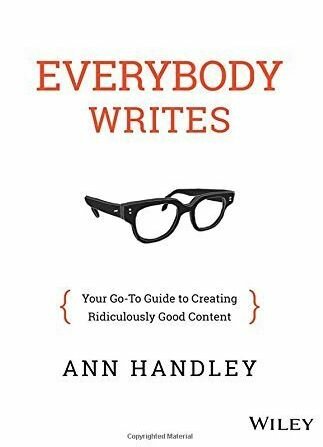
Everybody Writes by Ann Handley

everybody-writeseverybody-writes

Everybody writes, but do you know how to “create ridiculously good content?”  This “Go-To Guide” offers practical tips that can be applied to owning and running bed and breakfast inns.

Author Ann Handley explains a 12-step “Writing GPS”:

  1. Goal: know what you are trying to achieve and why it matters to your readers. Is it to educate them about your local area?  Inform them about upcoming events?  Entice them to vacation at your B&B?
  2. Reframe: phrase the idea in a way that relates to your readers.  Can they relate to needing a break?  Are they seeking to improve a relationship?
  3. Seek out the data and examples: use credible sources that support your main points and/or discuss personal experiences.  Your sources could be about travel and leisure, health and fitness, or food and wine.  The personal experiences could be yours or a story (told with permission) of a couple renewing their vows, for example.
  4. Organize: know what structure best helps communicate your point.  The story about the couple could be put in interview format, for instance.
  5. Write to one person: your goal is for your readers to recognize and relate to the issues. If may help to speak as though you are writing to a dear friend about the benefits of a bed and breakfast stay.
  6. Produce the ugly first draft: you first just want to get your initial thoughts written down.  This may not be pretty, but the object is to start writing!  You can edit it later.  What compliments do you hear from your bed and breakfast guests?
  7. Walk away: put some distance between your first draft and your second draft.  Even if it is to get up and make breakfast for your current guests.  The point is to allow yourself some time to get away from what you are writing.
  8. Rewrite: shape it into something a reader wants to read.  You may think of some additional points or some more specific examples to illustrate your points.  Perhaps you live in a historical bed and breakfast and learned more about the people who lived here and/or the guests they entertained.
  9. Give it a great headline or title: make sure you deliver on what the title says.  If your title is “10 Ways to Have Fun In [insert your area here]” make sure that you list 10 Ways and that people really have fun doing those leisure activities.
  10. Have someone else edit it: for grammar, usage, style, and punctuation.  Spell check is not enough and even that will not correct every spelling error.
  11. One final look for readability: make sure it is alluring, easy to scan, maybe part of a list or have bullet points.  Can people easily find my main points or do they have to hunt for them?
  12. Publish: know what you want your readers to do next so you can give your call to action.  This could include following you on social media, subscribing to your blog, booking a room, etc.

Ann Handley says that the more you think about what you want to say, and plan for it, the easier it is to say.

  • Why am I creating this?  Your content has to matter to your target audience.
  • What is my objective?  Know what you want people to do as a result of reading your content.
  • What’s my point of view?  Always be focused on your readers perspective (have a customer-centric point of view).
  • How will this impact my readers?  Put your readers into the story.

Creative Approaches To Frame Your Writing (examples listed apply to B&B’s):

  1. Quiz: Test Your Knowledge of Bed and Breakfast Etiquette
  2. Skeptic: Are Bed and Breakfasts Really Better Than Hotels?
  3. Explainer: The Bed and Breakfast Difference in Plain English
  4. Case study: How One Couple Renewed Their Relationship At a B&B
  5. Contrarian: Why Relaxation Is Underrated: The Key To More Productivity?
  6. How-to: How To Plan Your B&B Vacation
  7. Quick how-to: 3 Ways To Jump Start Your Vacation Plans
  8. How NOT to: 5 Ways to Compromise Your Relationships
  9. First person: My Personal Experience At Bed and Breakfasts
  10. Comparison: How B&B’s Measure Up To Hotels
  11. Questions and Answers: Frequently Asked Questions (FAQ)
  12. Data:Are People Working Longer Hours? Yes, Says Survey
  13. Man on the Street: Experts Offer Opinions On B&B Stays
  14. Outrageous: Why No Breaks Can Actually Make You Sick
  15. Insider secrets: The One Thing You Need To Know About Bed and Breakfasts

Bed and breakfasts can write using the 12 Steps of Writing GPS and they have many different ways to creatively frame their writing to their readers.  The important thing is that consistent, quality content keeps you in the forefront of people’s minds when they go to book their next vacation!

Visual Storytelling: Shaping

visual-storytelling-shaping

According to the book The Power of Visual Storytelling: How to Use Visuals, Videos, and Social Media to Market Your Brand by Ekaterina Walter and Jessica Gioglio, companies need to shape their visual story.  Each piece of content needs to have a clear theme and point of view as well as a take away message for the reader.

Content needs to be aligned with who you are as a company: voice, personality, and values. Once woven together, these themes shape your story.  It is important to list your goals and determine how visual content can help achieve them.  Ask yourself, if your company were a person, what would it look like in real life?

Embrace social media’s more personable, human side.  Look for the most commonly discussed conversation themes from your online consumers.  Shape your story and identify major themes to craft your visual content mix.  Look at your goals, company voice, and customer feedback by social media platform.

Determine Your Visual Content Mix:

  • The magic is in the mix to keep storytelling fresh
  • It allows you to deliver more personalized content to target audiences across different platforms
  • Evaluate your desired frequency per platform for posts, tweets, pins, etc.
  • Have a formula and clear plan of what steps you will take
  • Frequency varies by company and by social media channel
  • Quality content always trumps quantity and volume
  • Content must be interesting, important, and relevant to your audience
  • The usual shelf life of a tweet is considered an hour at most
  • The shelf life of a Facebook post is around 24 hours
  • Prioritize by social media platform the most important content themes that go into crafting your visual story
  • The mix needs to balance what is important from an ongoing visual storytelling perspective with goals, current events, questions, and general conversation from your customers
  • Content goals will likely change each month depending upon how much news your company has or tweets your making in response to fan engagement
  • Content should aim to be mostly upbeat, fun, motivating, and engaging
  • Outlining content themes makes it easy to identify what messages will be best conveyed as photos, videos, infographics, presentations, etc.

Authors Walter and Gioglio remind us to be listening and responding to what is being said about our company as well as learning the most commonly asked questions.  When we know that, companies can better respond to their own target audience.  This means setting goals and developing a strategy.  Our content will adjust in response to real time as we get live social media feedback.


Image by Marcus Berg of Unique Angles Photography