Category Archives: Success

Visual Storytelling: Google Plus

visual-storytelling-google-plus

The world’s biggest search engine, Google, started their own social media network called Google Plus in November of 2011.  This blog post is part of a series of blog posts discussing sections of the book, The Power of Visual Storytelling: How to Use Visuals, Videos, and Social Media to Market Your Brand by authors and social media experts Ekaterina Walter and Jessica Gioglio.

Google Plus Statistics:

  • With an open interface and community features, there are 250 million Google Plus accounts and 150 million active users across the globe.
  • 42% of Google Plus users are young adults, mostly 18 to 24.  Thus, Google Plus has many young, tech-savvy users.
  • People in the United States, India, and Brazil are the most active on Google Plus.
  • There is a stronger male audience with traditionally male brands doing well.
  • Video is the second most posted content on Google Plus.

Google Plus Features:

  • Users can separate connections by industry or interest with tags
  • People can share new and updates with your specific relevant audience (versus all of your connections)
  • Google’s +1 feature gives users a way of showing agreement or interest in content
  • Information shared on Google Plus is prioritized in online searches
  • Google Hangouts are private live video chats with a select group of people
  • Recorded Hangouts are automatically posted to YouTube (an even wider audience)
  • Manage Google Calendars and keep updated with current events
  • Google Plus supports long posts which you can combine with shorter, snappier posts with photos and videos
  • Ripples show how a post interacted with other Google Plus users

Google Plus Strategies:

  • Huge potential for brands looking to engage and connect with their audience
  • Brands can engage very differently with colleagues and customers
  • Tell a story through the images you share
  • Follow people whose posts and images you can share to inspire others
  • Host Hangouts and share them on YouTube to get traffic between the two sites
  • Tell stories by sharing videos of behind the scenes activity at your company
  • Tell customer stories and have them share their own company testimonials
  • Add great captions to make the images stand out on their own
  • Regularly point back to your website to show customers where they can learn more
  • Share different content with different circles of people
  • Have an active profile to boost you up in Google’s search engine by keeping content fresh and posting regularly
  • Label circles meaningfully to specifically target each group
  • Use the Events feature to promote future launches, conferences, meetings, presentations, awards, and more
  • Send out invitations that then sync with Google Calendars
  • Use the Ripples feature to find out more about how your posts have been shared
  • Use relevant keywords and links to your About page to help drive search engine optimization
  • Since Google Plus has a powerful search facility, add the +1 feature to your company’s web pages

Knowing all this about Google Plus means that it is very smart for companies to have an active social media presence on Google Plus.  Google tends to favor content shared on their own social network.  Feel free to share what you like about Google Plus in the comments below as well as what kind of results your business is getting from your Google Plus efforts.


Image by Marcus Berg of Unique Angles Photography

Visual Storytelling: Vine

visual-storytelling-vine

Vine is an app that lets you post short, up to six-second long video footage loops. These clips can be embedded in Twitter and Facebook posts.  Nearly all mobile users. This launched the short-form video craze.

People can like, comment on, and share your footage with other image sharing networks.  Early adopters, millennials, teens, and hardcore content creators are taking advantage of this social media platform.  Videos are driven by influential people.

Founded in June of 2012, it was acquired by microblogging website Twitter in October of 2012, just prior to its official launch in January of 2013.

Vine Statistics:

A mass audience of 40 million people on Vine

Branded content accounts for 4% of the top 100 tracked Vines

Branded Vines are 4 times more likely to be shared than branded online videos

5 Vine tweets are sent every second

Most Vine activity occurs between 10 and 11 am EST

More Vine tweets occur during the weekend than all of the weekdays combined

Vine New Feature:

In July 2014, Vine updated their app with a new “loop count” meaning every time someone watches a vine, a number on top of the video will appear showing how many times it was viewed. The “loop count” also includes views from vines that are embedded on to other websites.

Vine Strategies:

Vine is perfect for creating a short product showcase ahead of launch

Only have 6 seconds to convey your brand message

Have fun with your ideas

Run a contest and ask users to post their own video responses with a specific hashtag (#)

Tag your clips to ensure they are found by people who aren’t following you directly

Keep it simple, not too detailed or overly complicated

Do not rush your footage just to fit the time frame

Eliminate background noise if possible

Vine is an effective social media channel that companies can use to encourage innovative, imaginative responses in 6-second constraints.  If your company is not currently using Vine, this may be a social media platform to consider adding to promote your business.

The practical information about Vine came from the recommended bestselling book by Ekaterina Walter and Jessica Gioglio titled, The Power of Visual Storytelling: How to Use Visuals, Videos, and Social Media to Market Your Brand.


Image by Marcus Berg of Unique Angles Photography

Visual Storytelling: Tumblr

visual-storytelling-tumblr

We have been promoting the book The Power of Social Media: How to Use Visuals, Videos, and Social Media to Market Your Brand by Ekaterina Walter and Jessica Gioglio. This particular blog post will give a sneak peak into the authors comments about Tumblr.

For those not familiar with it, Tumblr is a social media channel that allows users to quickly reblog posts (texts, images, links, quotes, music, or videos) by others. Recently, Yahoo! purchased Tumblr for $1.1 billion. Tumblr is for quick visual inspiration and consumer lust. Users can only add comments if they reblog your post.

Tumblr Statistics:

  • 50% of posts on Tumblr are photos
  • Total unique worldwide visitors are more than 117 million
  • 52% of Tumblr visitors are male
  • 46.5% of Tumblr visitors are 18-34 years old
  • 35.2% of Tumblr visitors have a household income of greater than $100,000 per year
  • The average users spends 1 hr. 38 min. of time each month on the website doing nothing, but consuming content
  • The average Tumbler visit lasts 34 minutes

Tumblr Strategies:

  • Follow other Tumblr users and reblog relevant content
  • Post, promote, and participate in the Tumblr community
  • Let pictures tell the story on your Tumblr account, with text being secondary
  • The best time to post is between 7-10 pm EST on Monday through Thursday and anytime on Sunday
  • Use relevant tags so that your images show up in searches
  • Reblog plenty of content from other users
  • Keep a focus on your goals and repost only what is relevant to your message
  • Have a strategy and calendar to keep a steady stream of quality content
  • Keep a good mix of product info, lifestyle posts, and other content to not appear overly commercial
  • Combine visual, text, quotes, audio, and video in your feed
  • Stay consistent with tags and use a handful of “official” tags
  • Keep content fresh and post often
  • View analytics to see what sort of posts drive the most traffic, but still post a variety
  • Spend some time getting to know that platform and the kinds of content that people post

A Tumblr blog can be incorporated directly into a corporate website, which is great for search engine ranking. Businesses can use Tumblr as an overview of what is on their website.


Image by Marcus Berg of Unique Angles Photography

Visual Storytelling: Instagram

visual-storytelling-instagram

Instagram is a mobile-based app owned by Facebook. This is an app for the click-and-share generation.  The Power of Visual Storytelling: How to Use Visuals, Video, and Social Media to Market Your Brand by authors Ekaterina Walter and Jessica Gioglio provide useful statistics and suggest helpful strategies for companies to make the most of using Instagram.

Instagram Statistics:

  • 130 million active users every month
  • 70% of which are female
  • Users post 40 million photos per day
  • 8,500 likes per second
  • In 2012, Instagram users liked 78 million photos
  • 1,000 comments per second
  • More than 5 million photos uploaded to Instagram every day
  • Recording time is 15 seconds vs. competitor Vine’s 6 second clips
  • 67% of the top brands are now using Instagram
  • Luxury brands have the highest number of followers

Instagram Strategies:

  • Since Instagram has great photo filtering capacity, use filters creatively
  • Build a community by putting your official hashtag (#) in your banner heading so fans know how to tag you
  • Show behind-the-scenes photos
  • Use Instagram’s built-in statistics
  • Brands should be original, artistic, and community building
  • Post regularly about current events, holidays, and seasons
  • Use specific hashtags (#) for promotions or campaigns
  • Pick hashtags (#) that don’t have double meanings or could be read differently
  • Don’t use too many hashtags, need a central focus to your brand’s message
  • Join in the discussion if people are posting comments
  • Ask customers to upload their own photos and videos
  • Since 70% of users are female and women are responsible for the majority of household spending, companies can use this knowledge to share what attracts most female buyers

Using Instagram is a great way for businesses to let their target market(s) get to know what they are all about. It is essential that companies identify their brand’s central message in order to make the most out of knowing what photos and videos to share as well as which hashtags (including customized ones) to add to the posts. Smart businesses join in the conversation in response to when people post comments.  Instagram is a great social media platform for companies to use in order to promote their products and services.


Image by Marcus Berg of Unique Angles Psychology

Visual Storytelling: Facebook

Product DetailsWe have been taking an in-depth look at the incredibly informative book called, The Power of Visual Storytelling: How to Use Visuals, Videos, and Social Media to Market Your Brand. The Power of Visual Storytelling is written by authors and social media experts Ekaterina Walter and Jessica Gioglio. They devote a whole section of their book to informing the reader about Facebook statistics and giving profitable strategies for businesses using Facebook.

With over 1 billion active users, Facebook allowed brands and organizations to set up public pages in 2007.  Text, image, and video posts can all be seamlessly integrated in a user-friendly design.  Businesses can encourage comments, likes, and shares from their followers.

Facebook Statistics:

  • Half of Facebook fans prefer the brand pages to company websites
  • Posts between 100-250 characters get about 60% more likes, comments, & shares
  • Post at least one to two times per week to stay top-of-mind and relevant
  • Pictures receive 120-180% more engagement from fans than text-based posts.
  • 200 million photos get uploaded to Facebook on an average day
  • 80% of social media users prefer to connect with brands through Facebook.
  • Facebook is available in more than 70 languages
  • Facebook accounts for 1 in every 7 minutes spent online
  • Facebook accounts for 3 of every 4 minutes on social networking websites
  • U.S. desktop users spend an average of about six hours every month on Facebook
  • U.S. mobile users spend an average of eleven hours every month on Facebook
  • 2.5 billion content shares a day on Facebook
  • 2.7 billion likes a day on Facebook
  • 15 million brand pages on Facebook

Facebook Strategies:

  • Create photos specifically to generate conversations
  • Ask fans to upload their own videos
  • Create campaigns specifically for Facebook fans
  • Photos and videos work really well
  • Great creative with your header photo by choosing something eye-catching and inspiring
  • Change the header photo now and then to keep it fresh
  • Offer creative visual contests to engage your fans in a sustainable way
  • Ask questions to spark engagement
  • Improve customer service by talking to fans, encouraging feedback, and sharing images
  • Encourage user-generated content
  • Followers relate more to brands
  • Fans feel like they are an active part of the product experience than a passive consumer

The authors recommend that businesses use Facebook in order to attract fans, build brand awareness, and increase customer loyalty.  The key is engaging in conversations with fans, sharing useful content, and posting pictures and videos (from the brand itself as well as from the fans). Facebook is a valuable social media platform with which businesses can tell their story and interact with their fans.

Visual storytelling can take place on Pinterest, YouTube, Facebook, Twitter, Instagram, Tumblr, Vine, Slideshare, and Google Plus.  We will look at more social media platforms as the Visual Storytelling series continues.

Visual Storytelling: YouTube


visual-storytelling-YouTube

Bed and Breakfast Blogging recommends the book The Power of Visual Storytelling: How to Use Visuals, Videos, and Social Media to Market Your Brand by authors Ekaterina Walter and Jessica Gioglio. Earlier, we gave an introduction to the book as well as featured some of their Pinterest tips.  This post will specifically look at their YouTube tips.

YouTube (the second largest search engine) began in 2005 and is owned by Google (the largest search engine).  It is great for brand channels since businesses can place an intelligent banner image, embed social media links, and even feature a thirty second video trailer.

Hyperlinks can be incorporated into the video itself to create a “clickable” interactive video. Streaming video delivers nearly three times higher brand awareness and 100% higher purchase intent.

Important YouTube facts to know:

  • The average YouTube viewer spends 900 seconds per day watching videos
  • 44% of YouTube users are between the ages of 12 to 34 years old
  • Over 829,000 videos are uploaded each day
  • 72 hours of video are uploaded to YouTube every single minute
  • 3 billion views daily on YouTube
  • More than 1 billion unique users visit YouTube each month
  • 70% of YouTube traffic comes from outside the United States
  • YouTube is localized in 53 countries and across 61 languages
  • 25% of global YouTube videos come from mobile devices

Authors Ekaterina Walter and Jessica Gioglio recommend that businesses be responsive to their audience.  Show an informal look at your company.  Video is a very flexible way to tell a company’s story and have a global reach. The key is to add value, inform, and entertain. This is a great way to do what social media expert Shannon Belew calls social selling.

The average video length is 2 minutes and 46 seconds.  Businesses should optimize their content for keywords used by their industry.  Discover the terms your target market is searching for and develop your videos around that.

Consider posting videos in response to comments and questions.  Let your fans and customers tell their own stories.  One of your videos could go viral (spread quickly over the internet).  Thus, businesses should use YouTube to tap into The Power of Storytelling.


Image by Marcus Berg of Unique Angles Photography

Power of Visual Storytelling

power-of-visual-storytelling

Another great book is The Power of Visual Storytelling: How To Use Visuals, Videos, and Social Media to Market Your Brand co-written by Ekaterina Walter (cofounder and chief marketing officer at Branderati)  and Jessica Gioglio (social media manager for Dunkin Donuts).  The back of the book says, “Attention is the new commodity. Visual storytelling is the new currency.”

According to this book, “Visual content in real time can give people a different perspective instantly.”  The goal is to create visual, shareable content that conveys your brand’s central message.  Visual storytelling has the potential to:

  • Enhance loyalty
  • Strengthen customer relationships
  • Increase awareness
  • And much more!

With 6.8 billion mobile subscriptions at the end of 2012, about 96% of the world population has a cell phone. With the on-the-go nature of people’s lives in this present age, sharing user-generated images and visuals is happening in real time.  According to the authors, visuals are processed by the human brain 60,000 times faster than text!

Creating the right image to convey your message means you must know who you are as a brand, what you stand for, and how this relates to the goals of your customers.  The book reveals some fascinating statistics about what website visitors think is important:

  • 46.1% of people say that a website’s design is the #1 criterion for discerning the credibility of the company (research from Billion Dollar Graphics)
  • 67% of consumers consider clear, detailed images to be very important, and carry even more weight that then product information, full description, and customer ratings (MDG Advertising Research)
  • 51% of Americans trust user-generated content over other information on a company website

The Power of Visual Storytelling details the vast variety of visual content that is available for companies to use:

  • Images
  • Photography
  • Graphs
  • Drawings
  • User-generated images
  • Collages
  • Images with text overlays (captions, quotes, stats)
  • Word photos
  • Memes (imitated things)
  • Postcards and e-cards
  • Cartoons
  • GIFs (Graphics Interchange Format)
  • Infographics
  • Videos
  • Presentations
  • Aggregators

Collaborative storytelling benefits both customers and companies.  Customers get to see their images liked by fans of the brand.  Companies get insight on what customer motivation. According to BuzzFeed, every minute online:

  • 208,300 photos are posted to Facebook
  • 27,800 photos are shared on Instagram
  • 510,000 photos are liked on Instagram
  • 100 hours of video is uploaded to YouTube

The authors caution readers that there is not a one-size-fits-all solution to social media. Each network has its own character and audience.  Instead of being “broadcasted to” audiences want to feel “listened to” as we invite them to be part of the conversation.  The next series of posts will feature their tips for various social media networks, including:

  • Pinterest
  • YouTube
  • Facebook
  • Twitter
  • Instagram
  • Tumblr
  • Vine
  • Slideshare
  • Google Plus

Later we will highlight their tips to developing a visual story road map from strategy to implementation.  I highly recommend that businesses read The Power of Visual Storytelling!

***Please note that I am not being compensated for this book review.  I just love the book so much that I am recommending it to all my blog readers.


Image by Marcus Berg of Unique Angles Photography

The Art of Social Selling

the-art-of-social-selling

I highly recommend Shannon Belew’s book called The Art of Social Selling: Finding and Engaging Customers on Twitter, Facebook, Linked In, and Other Social Networks. Belew says the power has shifted from the brand to the consumer.  Marketing has become a two-way conversation with the customer.  The art of social selling is based entirely on your ability to build relationships.

Did you know that over one BILLION people are active on social networks? Thus, it is extremely important that you know where your customers are hanging out.

Shannon Belew defines “social selling” as the identification, targeting, and reaching out to prospective and existing customers through social media channels and social communities in an effort to engage them in conversations that result in a potentially mutually beneficial relationship.  This means being more social (listening and conversing about the customer’s needs) and less traditional selling.  The heart of social selling is relationship building.

This book reveals Belew’s ten most important rules for online social interactions:

1) Be genuine: your social networking persona should be an extension of your real persona

2) Listen, listen, listen: to truly hear what the customer is saying so you can present a viable solution you must find and monitor conversations that relate to your prospective customer’s needs, concerns, and interests with the goal of remaining relevant to your customers

3) Be responsive: to customer-related complaints and concerns voiced across social media channels

4) Follow the leader: follow group guidelines, watch how members participate and interact with one another

5) Tailor the conversation: find common ground and share information relevant to your audience

6) Be helpful: offer educational opportunities, general support, and even inspiration

7) Identify the enter and exit signs: know if it is polite to enter the online interaction and make sure to exit gracefully

8) Maintain separation of professional and personal: make sure what you share is suitable for both audiences

9) Be consistent: give people a clear expectation of who you are and what your area of expertise is

10) Admit when you are wrong: be willing to apologize, it is a sign of strength and goodwill

Shannon Belew’s concept of “unselling“:

  • Unselling is a process that occurs over time
  • Requires consistent interaction with your prospects via social media
  • This establishes your credibility as a good resource
  • Identify and interact with industry influencers
  • Be a thought leader to build social influence
  • Embrace consultative sales in which you are developing conversations that educate and assist the prospect through the buying process
  • This opens the door to an increased amount of sharing
  • This increases the comfort level of prospects as well as puts you in the role of expert

Belew talks about word of mouth marketing.  Social shoppers are not only influenced by their friends and family, but by perfect strangers, too.  Encourage your happy and satisfied customers to provide online testimonials.  Include your links on thank-you pages and emails. Respond to negative reviews quickly.  Thank customers publicly for their positive reviews.

In this book, Shannon Belew cites a 2013 Technorati Report that stated that blogs are the third-most influential digital or online resource and the fifth most trusted resource on the internet.  Blogs are great for sharing on social media.  Plus, points made in a blog post can be posted or tweeted on social media.  Later in the book, Belew gives specific tips about using each of the major social media channels.  This is an incredible resource for business owners.

*Please note: I am not being compensated for this review.  I just really love this book and think it will help others wanting to grow their business!


Image by Marcus Berg of Unique Angles Photography

The Tao of Twitter (Part 4)

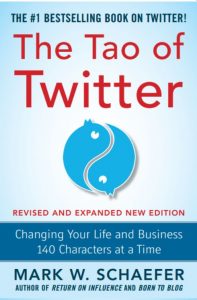
tao of twitterThis is the last part of a four-blog-post series highlighting useful information from the hot #1 bestselling book on Twitter: The Tao of Twitter by Mark W. Schaefer.  One of Mark’s essential keys to Twitter success involves providing meaningful content.

His suggestions include:

  • Tweet about what interests you
  • Share what you are reading online
  • Link to your blog or other blogs with rich and relevant content
  • Link to your comments on other social media platforms
  • Leverage your other online content
  • Share something human like what you are grateful for
  • Tweet something non-work related
  • Tweet news related to your business or industry
  • Tweet your opinion on something in the news or something funny
  • Tweet in the moment
  • Tweet at peak times
  • Thoughtfully schedule tweets (Hootsuite, Tweetdeck, or Buffer can help you fan them out throughout the day)
  • Tweet regularly only if you have something of value to share
  • Sharing someone else’s tweet is a form of complimenting them and it puts you on their radar screen: put their content then via @personyouareRTing
  • Keep your tweets as short as possible to make them more shareable
  • Tweet exclusive content before it is released anywhere else
  • Build up the buzz about something before it comes
  • Link to interesting content such as blogs, podcasts, and videos

Schaeffer also discusses the value of using and making Twitter Lists:

  • Click the Me icon, then click Lists and it will show lists subscribed to and lists you are a member of
  • To create a list its name cannot exceed 25 characters
  • Name the list something that makes sense but also grabs people’s attention
  • Click gear icon drop down menu and select Add or remove from lists
  • You do not need to be a follower to a user to add that person to the list
  • You can edit and delete any list you make
  • You cannot add or remove people from your list, you must go to their profile page in order to add or remove them
  • You can follow lists without following individual users in the list
  • Share your lists on Twitter and other platforms
  • Include yourself in the lists with the help of Hootsuite (open your profile in a tweet that mentions you and click to Add to List)
  • Create lists that are helpful to your target audience

Innkeepers, what would be useful information to your target audience: guests who want to stay at your bed and breakfast inn?

  • List of travel organizations and media
  • List of groups providing recipes
  • List of attractions and resources in your particular geographic location
  • etc.

If you are looking for someone to tweet on behalf of your bed and breakfast, we are experienced in helping B&Bs gain more clients.  We invite you to contact Bed and Breakfast Blogging with Kristi Dement for a free consultation.  We provide professional blogging and social media services.

Quoting Experts Gets Results

quoting-experts-gets-you-results

Did you know that quoting experts gets results?  Those who quote experts show they recognize the key people associated with a specific subject. In Ali Luke’s blog post “26 Essentials for Blogging Success What You Need To Know” she wrote, “When you include quotes from established experts…you add authority, value, and interest to your blog.”

People love reading quotes from:

  • Actors
  • Activists
  • Athletes
  • Authors
  • Celebrities
  • Comics
  • Entertainers
  • Experts
  • Leaders
  • Inventors
  • Philanthropists
  • Politicians
  • Role models
  • Speakers
  • etc.

The following success quotes come from a variety of people:

“A person who never made a mistake never tried anything new.” (Albert Einstein)

“Each person must live their life as a model for others.” (Rosa Parks)

“In order to succeed, your desire for success should be greater than your fear of failure.” (Bill Cosby)

“Life is 10% what happens to me and 90% how I react to it.” (Charles Swindoll)

“Nothing is impossible.  The word itself says, ‘I’m possible.'” (Audrey Hepburn)

“The two most important days of your life are the day you were born and the day you find out why.” (Mark Twain)

“Whatever the mind of man can conceive and believe, it can achieve.” (Napoleon Hill)

“You miss 100% of the shots you don’t take.” (Wayne Gretzky)

What about you?  Do you have a favorite success quote you would like to share with us?  I respond, when appropriate, to every comment.


Image by Marcus Berg of Unique Angles Photography

« Older Entries Recent Entries »